The 1985 Project Part 30: Luther Vandross - The Night I Fell in Love
Songs, arrangements, and especially singing - he was fantastic

I’m doing a deep dive into the albums of 1985, starting with the top 40 finishers in that year’s Village Voice Pazz and Jop Poll, with plans to keep the series going a long time.
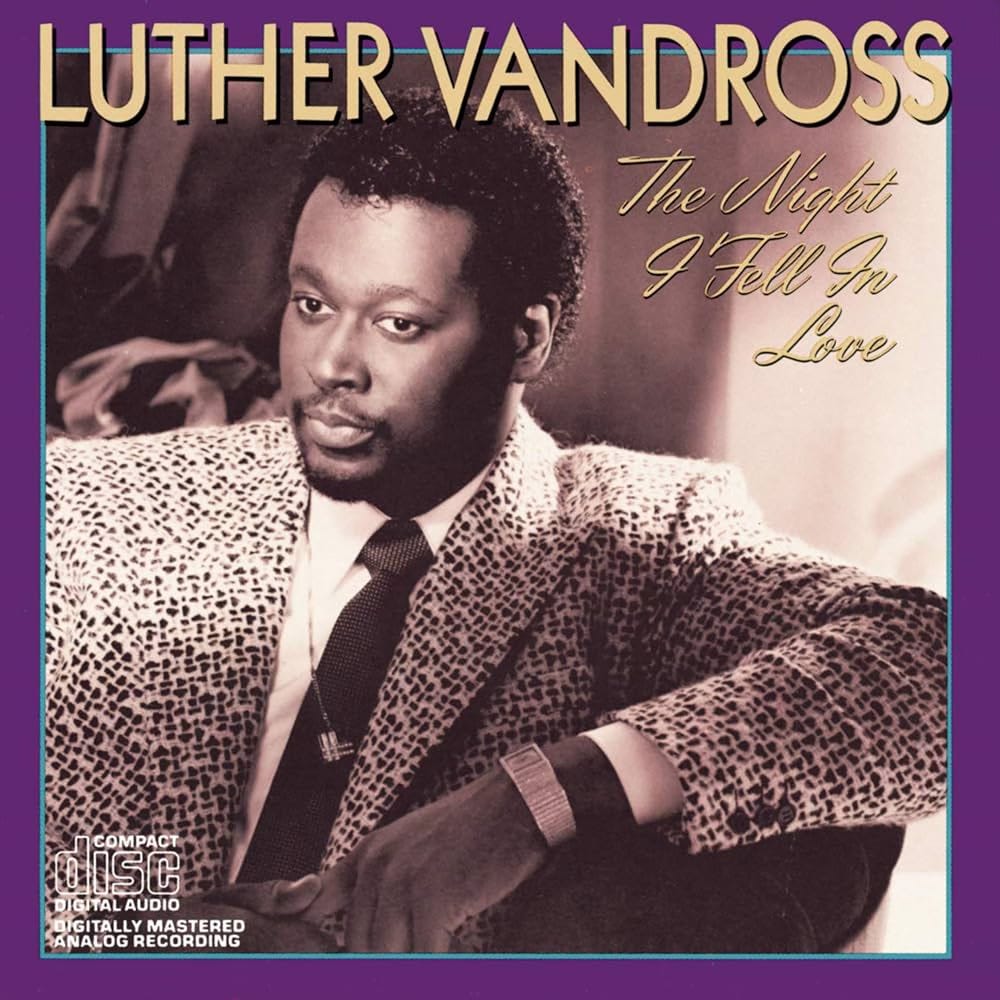
Considering how much I have enjoyed his music, I sure haven’t spent much time listening to Luther Vandross. I remember hearing “Never Too Much” on the radio in 1981, and being enthralled – to this day, I consider it to be a masterpiece of r&b on the edge between quiet storm and funk. His 1983 album Busy Body was a fave of mine when I worked in the record store with a very limited number of promos we could play throughout the day. I saw him live that year, and again in 1986. Both times he put on a dazzling display of vocal virtuosity without turning to bombast.
So with all that going for him, why didn’t I listen to his albums more often? Part of it was a prejudice I formed in my 20s against the newer, slicker sounds in r&b music; at the time hip hop was starting to gain traction, it seemed the music that was being played on the radio was the same kind of enemy I had known when punk rock faced off against “classic” rock. I wasn’t always willing to give the music a chance to win me over if I was hearing too many synths, strings, and that drum sound of the time.
Which brings me to today, and the fact that I just listened to the 30th place finisher in the 1985 Pazz and Jop Poll for the first time. I no longer understand why I resisted the sonic approach to this music. The arrangements are tasteful and understated, with the electronic syn-drums popular in the mid-80s laying down tight, crisp, and inventive rhythms; with Marcus Miller playing bass like he was threading a low-end needle; with synths and strings and horns providing harmonic accompaniment that always fit the mood of the songs; with backing vocals (which include Darlene Love and Cissy Houston in the chorus, not that you could tell) that are playful and creative. And then there is the lead singer.
Luther Vandross was influenced more by female vocalists than men. You can hear some Aretha Franklin phrasing now and then, especially when he tosses off short bursts of melisma. He was always so in control, delivering emotions without playing them up. They are part of the songs, and they are felt rather than forced. All the songs here are melodically inventive, and Vandross could make them sound natural, as if those twists and turns were the only way these words could be sung.
Vandross wrote or co-wrote six of the eight songs here. Brenda Russell and Stevie Wonder contributed one apiece. There is only one theme – love – which is basically what Vandross always sang about.
“‘Til My Baby Comes Home” is an uptempo burst of paranoid enthusiasm (with keyboards provided by Billy Preston) about a man who can’t stop worrying when his lover is gone despite everything she has done to reassure him. The title track is an earnest recollection of the greatest experience of his life, that night he knew he was in love. “If Only For One Night” is a lovely ballad as Vandross wants desperately to at least experience this partner one time. He then covers Stevie Wonder’s bizarre “Creepin,” wherein he has weird love dreams and makes me wonder if the partner always shows up.
Side two starts with “It’s Over Now,” a look at the disillusionment at the end of a love affair when he realizes his partner has two other guys besides him. “Wait For Love” is full of advice about not jumping in with somebody until you know it’s real. “My Sensitivity (Gets In the Way)” is the only song Vandross wrote by himself here, and nobody told him that those lyrics don’t scan too well; still, he covers another aspect of love here, showing that it’s possible to mess up timing with a potential partner. Finally there’s “Other Side of the World,” a lovely song about discovering that what he was dreaming about was standing right next to him all along.
Luther Vandross was a gay man whose career depended on him singing love songs to women. One subtle way he approached this was to limit the number of times he specifically referenced gender in the songs he sang. On this album I think there are only two or three songs he mentions women as the partner under consideration. Of course, in 1985, and for the rest of his life, this was not noticed at all. Vandross never publicly came out. All these years later, though, it is possible to hear him playing it both ways on some of these songs, most especially Brenda Russell’s beautiful “If Only For One Night,” which becomes even more full of longing if you consider he can’t have a real relationship with this person because he’s afraid of being seen as gay rather than because one or the other partner is married.
I suppose one of these days I should check out the albums he released after this one. Vandross was such a masterful singer, and at least in these first few records he was working with such impressive material and arrangements. I hope he kept it up.
Of course he came to the attention of many as a backing vocalist on the Young Americans album for Bowie. I think he was underrated in some circles because the material could be a bit schmaltzy. But the fella could definitely hold a tune to say the least. May he rest in peace. My favourite vocals of his were on the Change album - Searching the best imho. Great article.
Same for me, Steve: Vandross is someone I always think - when I hear his voice - that I should pay more attention to, and yet I have not done so. I will listen to some of the songs you mention. I had no idea he was gay. Somebody else who didn't let on for a very long time - and who also gained fame in the 80s - was Melissa Etheridge. I love her songs and bluesy style, and was taken aback when she came out. It didn't and doesn't bother me, but it was just a bit of a shock. So I think singers have good reason to be cautious. Apparently Patti LaBelle confirmed he was gay years after his death and added that he didn't want to disappoint his female fans.